The story of Khartal — the ancient heartbeat of the Thar Desert
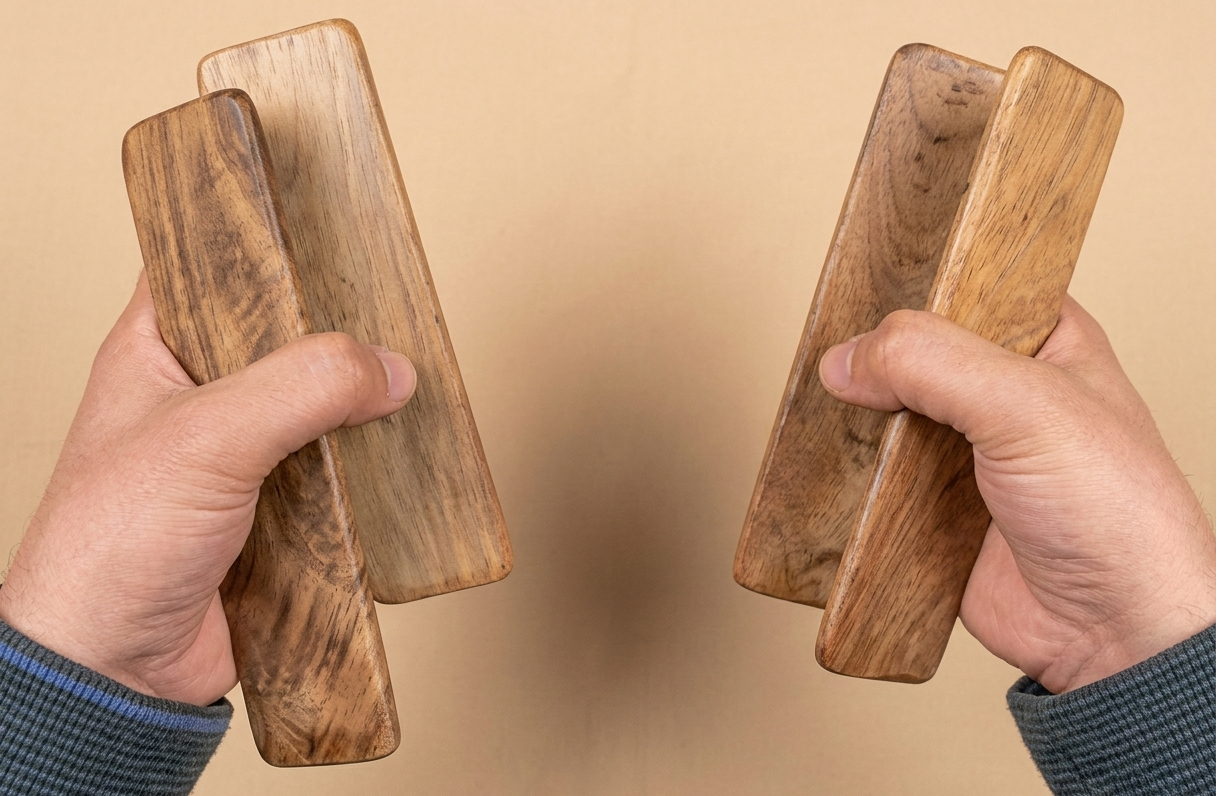
Pick up two flat pieces of Sheesham wood. Hold them loosely between your fingers. Clap them together. That’s it. That’s the Khartal. And yet, in the hands of a Manganiyar master from the Thar Desert, those two unremarkable pieces of wood will make you forget where you are, stop your conversation mid-sentence, and feel something ancient stir inside you. No strings. No membranes. No electronics. Just wood, rhythm, and centuries of devotion.
The Khartal — derived from the Sanskrit words Kara (hand) and Taal (rhythm) — is one of India’s most ancient percussion instruments, and arguably its most underrated. While the tabla and sitar have conquered global concert halls, the Khartal has remained quietly rooted in the dust and devotion of Rajasthan, passed from hand to hand across generations, carrying within its simple wooden form an entire civilisation’s memory of faith, community, and survival.
Roots in Devotion — The Origins of Khartal
The Khartal’s origins are inseparable from the tradition of bhakti — the devotional movement that swept across medieval India between the 12th and 17th centuries. Wandering saints, mystics, and poet-singers known as bhaktas needed an instrument that was portable, inexpensive, and capable of producing rhythmic accompaniment to their devotional songs. The Khartal was the answer. Light enough to carry on foot across the subcontinent, simple enough to be made from a fallen branch, and expressive enough to hold a crowd in silence.
The instrument finds particular resonance in the legacy of Mirabai — the 16th-century Rajput princess-turned-mystic poet whose devotional songs to Lord Krishna are among the most beloved in Indian literature. Mirabai is said to have performed her bhajans accompanied by the clapping of wooden pieces — an early form of the Khartal. Her tradition of ecstatic, rhythmic devotion laid the cultural groundwork upon which the instrument’s role in Rajasthan would be built for centuries to come.
“In the hands of a Manganiyar master, those two pieces of Sheesham wood stop being an instrument. They become a conversation between the musician, the divine, and everyone in the room.”
Over time, the Khartal evolved from a simple devotional tool into a sophisticated percussion instrument capable of producing complex rhythmic patterns, intricate ornamentations, and even melodic suggestion through tonal variation. Master players developed the ability to produce multiple distinct sounds from a single pair — a sharp crack, a deep resonant thud, a sliding tone — simply by adjusting the angle, pressure, and movement of the wrist. What looks like effortless clapping is, in reality, a lifetime of practice.
The Langa and Manganiyar — Keepers of the Flame
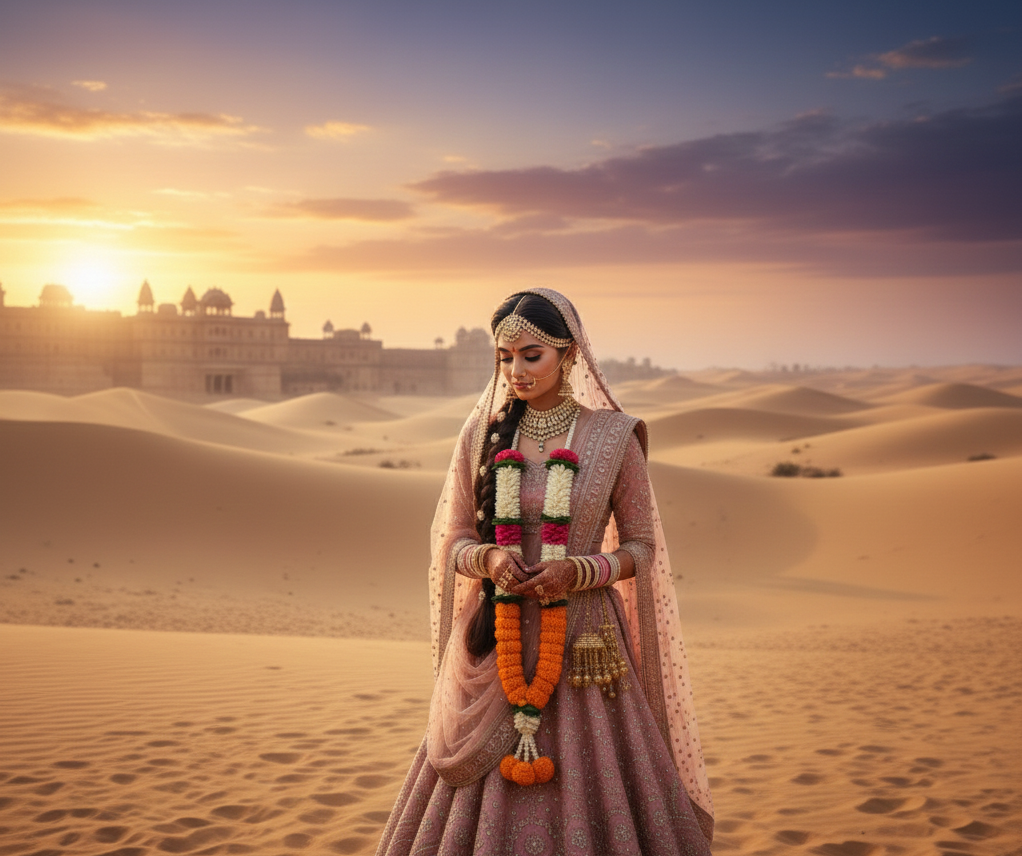
If the Khartal has a true home, it is among the Langa and Manganiyar communities of western Rajasthan — particularly in the districts of Jaisalmer, Barmer, and Jodhpur. These are hereditary musician communities whose identity, livelihood, and spiritual life are inseparable from music. For them, music is not a profession in the modern sense. It is seva — service. It is the thread that connects the living to their ancestors, communities to their patrons, and the earthly to the divine.
The Manganiyar community has carried the Khartal as one of its signature instruments for generations. Their music is a glorious fusion — the haunting Kamaicha string instrument, the thunderous Dholak, the Morchang jaw harp, powerful vocals, and above all, the insistent, hypnotic click-clack of the Khartal holding everything together like a rhythmic spine. Manganiyar performances are not concerts in the Western sense. They are communal experiences — gatherings of memory, celebration, and devotion where the boundary between performer and audience dissolves entirely.
Traditionally, these musicians performed at weddings, birth ceremonies, harvest festivals, and in the courts of Rajput nobles. The relationship between musician and patron was sacred — the Manganiyar would sing the patron’s genealogy, bless his household, and mark every important life event with music. In return, the patron provided grain, land, and protection. This Jajmani system sustained the community for centuries.
The Instrument Itself — More Than Meets the Eye
A traditional Khartal consists of two flat rectangular pieces of Sheesham wood (Indian Rosewood — Dalbergia sissoo), typically 18 to 25 centimetres long, smoothed and sometimes slightly curved at the edges. The density and grain of the wood determines the tonal quality — seasoned Sheesham produces a warm, resonant sound, while harder woods give a sharper percussive crack. Some players prefer pairs made from different wood types to access a wider tonal range.
The Khartal is held between the fingers of both hands — typically two pieces per hand, though some performers use a single pair. The technique involves an extraordinary range of micro-movements: the fingers act as springs, allowing the pieces to resonate freely after each strike rather than being damped. Advanced players can produce rapid-fire rhythmic patterns that rival the speed and complexity of tabla compositions — all while singing simultaneously. A feat of coordination that takes decades to master.
Legendary Masters — The Great Khartal Players
The history of the Khartal is written in the names of the masters who carried it forward. Gazi Khan Barna of Jaisalmer is perhaps the instrument’s greatest living ambassador — having shared the stage with Ustad Zakir Hussain and A.R. Rahman, bringing the Khartal to audiences who had never imagined that two pieces of wood could hold their attention for an hour. His performances are legendary — a blizzard of rhythm, grace, and joyful abandon that makes the complex look effortless.
Bhungar Khan Manganiyar, recipient of the prestigious Sangeet Natak Akademi Award — India’s highest honour in the performing arts — represents another pinnacle of mastery. His playing carries the full weight of the Manganiyar tradition: deeply devotional, technically flawless, and emotionally overwhelming. Barkat Khan and Sattar Khan are among the other revered names whose artistry has shaped how the instrument is played and taught today. The late Ustad Bismil Khan remains a towering historical figure — a musician whose influence on the Khartal tradition continues to be felt in the playing of every serious practitioner.
🏆 Legendary Khartal Masters
- Gazi Khan Barna — Jaisalmer’s master; performed with Zakir Hussain & A.R. Rahman
- Bhungar Khan Manganiyar — Sangeet Natak Akademi Award recipient
- Barkat Khan — Celebrated Manganiyar virtuoso
- Sattar Khan — Revered folk musician of the Thar tradition
- Ustad Bismil Khan (late) — Historical giant whose legacy shapes the tradition today
The Khartal Today — Between Survival and Revival
The Khartal and the communities that play it stand at a crossroads. On one hand, there is genuine global interest — international folk festivals like RIFF (Rajasthan International Folk Festival) in Jodhpur bring Manganiyar and Langa musicians to audiences across Europe, America, and Asia. UNESCO’s recognition of this tradition as an Intangible Cultural Heritage has lent it institutional prestige and international visibility.
On the other hand, the economic foundations of the tradition are fragile. Young musicians face the pull of urban employment, the decline of the traditional Jajmani patronage system, and the challenge of monetising a tradition in a streaming economy that rarely rewards depth and specificity. The instruments, the songs, the rhythmic systems — all transmitted orally, from elder to child — and the chain is only as strong as its weakest link.
This is why documentation, appreciation, and genuine engagement from audiences matter. Every time you share a Khartal performance, attend a folk festival, or simply tell someone about this tradition — you are participating in its survival.
Why the Khartal Matters
There is something quietly radical about the Khartal. In a world drowning in electronic sound and studio-polished production, here is an instrument that needs nothing — no power, no amplification, no technology. Just wood, air, and human skill. It is a reminder that rhythm is not invented; it is remembered. That music, at its most essential, is a human body in conversation with time.
The Khartal is also a reminder of what culture means at the community level — not a museum piece or a heritage brand, but a living practice that feeds families, marks births and deaths, celebrates love, and carries the names of the dead forward into the future. The Manganiyar musicians are not performing history. They are living it — and with every clap of those two pieces of Sheesham wood, insisting that it continues.
So the next time you hear the Khartal — in a performance, a recording, or a crackling video filmed at a Rajasthani wedding — stop what you are doing. Listen. Let those two wooden pieces do what they have always done. Let them remind you that the most profound things in this world are often the simplest ones.
🎬 Watch & Be Mesmerised
Two performances that will change how you hear rhythm forever.
🌾 Your Turn — Keep the Tradition Alive
Who is your favourite Khartal player? Do you have a memory, a story, or a name we haven’t mentioned? Drop it in the comments — let’s build a living archive of this extraordinary tradition together.