Author name: Shashi

Uncategorized

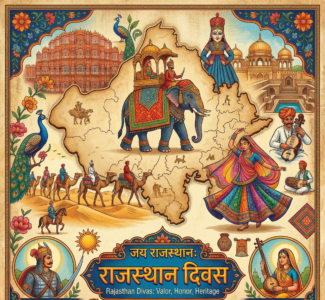
RAJASTHAN DIVAS 2026

“Sone ri dharti, jathe chandi ro aasman,
Rang rangeelo, ras bhar’yo, mharo pyaro Rajasthan.”
A land of golden earth, where the sky turns silver —
Colourful, full of life and essence — my beloved Rajasthan.

I will be honest with you. As I begin writing this, I already know I will fall short. Not because the words aren’t there — but because no words have ever been enough. The whole of the internet, with its billions of pages, cannot hold Rajasthan in full. It would take lifetimes just to read the stories. Generations to walk its sands. And still — some fort would remain unexplored, some bhajan unheard, some warrior unhonoured. But today is Rajasthan Divas — and so we try.


🌅 The Date We Got Wrong For 75 Years

For 75 years, Rajasthan Divas was celebrated on 30th March. Until someone noticed something extraordinary hiding in plain sight: when Sardar Vallabhbhai Patel stood in Jaipur on 30 March 1949 and inaugurated Greater Rajasthan, that date in the Hindu calendar was Chaitra Shukla Pratipada — the first dawn of the Hindu New Year, Vikram Samvat. Under Revati Nakshatra and Indra Yoga. Auspicious beyond all measure. For three generations, a colonial calendar had quietly buried the true soul of our founding day.

In 2025, Chief Minister Bhajanlal Sharma brought it home. This year, 19th March 2026 — Rajasthan Divas — falls on Chaitra Shukla Pratipada, the Hindu New Year, Gudi Padwa, and the opening of Chaitra Navratri. Three beginnings on a single morning. If that is not auspicious, nothing is.


🗡️ One Name. A Thousand Kingdoms.

Before it was Rajasthan, the British called it Rajputana. Before the British, it was a mosaic of magnificent kingdoms — Mewar, Marwar, Dhundhar, Hadoti, Shekhawati, Vagad — each with its own dynasty, its own language of honour, its own glorious and blood-soaked history. The Rajputs were Raja-putras, Sons of Kings, warriors whose code ran on three pillars: shaurya (valour), wafadaari (loyalty), and maryada — dignity unto death.

At independence in 1947, this land was not one state but 19 princely states, 3 chiefships, and a British territory — each with its own flag and army. The oldest, Mewar, had stood since 565 AD — over 1,400 years of unbroken lineage, the longest-surviving royal dynasty in the world. Sardar Patel, the Iron Man of India, stitched it all together across seven breathtaking phases between 1948 and 1956. A footnote history rarely tells: the day before the inauguration, his aircraft made an emergency landing in the Rajasthan desert. He walked out, dusted himself off, and inaugurated the state the very next morning. Some men are built differently.


⚔️ The Warriors Empires Couldn’t Break

Maharana Pratap of Mewar — born in Kumbhalgarh — chose to eat forest roots and bread made of wild grass over signing a peace treaty with Akbar. After the Battle of Haldighati (1576), he retreated into the Aravallis and waged a 25-year guerrilla war. His horse Chetak, fatally wounded in battle, still carried him across a river to safety before collapsing. By 1582, Pratap had reclaimed most of Mewar. He died free.

Prithviraj Chauhan of Ajmer, the last great Hindu emperor of the north, defeated Muhammad Ghori in 1191. His court poet Chand Bardai immortalised his love and valour in the epic Prithviraj Raso. And Rani Padmavati (Padmini) of Chittorgarh — when Alauddin Khilji’s armies breached the gates in 1303 — led the greatest jauhar in Rajput history. Over 16,000 women walked into the flames. You can still see their ochre handprints on Chittor’s walls. The fort has seen three jauhars. It does not forget. Neither should we.

Did you know? The Great Wall of Kumbhalgarh — built in the 15th century by Rana Kumbha around the fort where Maharana Pratap was born — stretches for 36 kilometres, making it the second longest wall in the world after the Great Wall of China. Inside it sit 360 temples. The fort was never conquered by direct assault in its entire medieval history. The world just hasn’t been paying enough attention.


🙏 Temples That Rewrote What Stone Can Do

The Dilwara Temples near Mount Abu, carved in white marble between the 11th and 13th centuries, are said to have been built under a unique payment system — craftsmen paid by the weight of marble dust they produced. Every flick of the chisel, an act of devotion. The Ranakpur Jain Temple stands on 1,444 pillars — no two alike — a symphony carved in stone dedicated to Adinath, the first Jain Tirthankara.

Inside the living fort of Jaisalmer — built in 1156 AD, where nearly a quarter of the old city’s population still lives within its golden sandstone walls — are seven Jain temples from the 12th to 16th centuries, housing a library of palm-leaf manuscripts dating back 900 years. This fort changes colour through the day — amber at dawn, honey-gold at noon, flame-orange at dusk. A UNESCO World Heritage Site. An entire living neighbourhood. An act of wonder.

The Eklingji Temple near Udaipur, where every Maharana of Mewar considered himself not king — but merely the chief minister of the deity. They ruled a kingdom but called themselves servants. And Pushkar — one of the only temples in the world dedicated to Lord Brahma, the creator — sitting on a lake so ancient no one is certain of its origin, where pilgrims have come for over 2,000 years without interruption.


🎵 The Emperor Who Disguised Himself To Hear Her Sing

Mirabai — born a Rathore Rajput princess in Merta, married into the royal house of Mewar — gave up a palace to sing bhajans barefoot at Krishna’s feet. According to widely recorded accounts across centuries of Bhakti literature, Emperor Akbar himself, accompanied by the legendary court musician Tansen, came disguised as a humble pilgrim to Chittorgarh just to hear her sing — and fell at the feet of her deity in silence. Whether history confirms this meeting or devotion built it over centuries matters very little. The fact that this story has survived 500 years tells you everything about the power of her voice. More than 1,200 songs carry her name. We still sing them.

This same soil gave us Mehdi Hassan — the King of Ghazals — born in Luna, Rajasthan, whose voice Lata Mangeshkar said carried the touch of God. Jagjit Singh, born in Ganganagar, who returned the ghazal to a generation that had forgotten it. Grammy winner Vishwa Mohan Bhatt from Jaipur, inventor of the Mohan Veena. And Ustad Anwar Khan Manganiyar — Padma Shri awardee from Jaisalmer — whose community of hereditary Muslim musicians sings Hindu bhajans, Sufi qawwalis, and Rajasthani folk with equal devotion, on stages from Carnegie Hall to the Kremlin. In Rajasthan, music has never had a religion.


🌿 75% Vegetarian. Zero Compromise On Flavour.

Approximately 75% of Rajasthan’s population is vegetarian — the highest of any state in India, and by most estimates, the most vegetarian large region in the world. This is not a statistic. It is a civilisation’s statement. Jainism runs deep here; the Marwari trading communities built their empires on ahimsa. Non-violence in Rajasthan is not a philosophy. It is breakfast.

And the cuisine born from this desert — where water is precious and the Thar shows no mercy — is one of the most extraordinary on earth. Dal Baati Churma, sun-baked wheat dumplings drowned in ghee. Ker Sangri, a wild desert berry curry that nomads carried across the Thar for centuries. Ghevar, a latticed sweetmeat of flour and ghee eaten at every celebration that joy demands. This land took scarcity and turned it into a feast. It always does.

“Where there is no water, no mercy from the land, and no ease — they made the richest food, the most generous hospitality, and the most extravagant art. That is the Rajasthani spirit.”

It is no surprise then that Rajasthan is one of India’s top tourist destinations — the forts, the colours, the food, the living heritage drawing millions of visitors every year, forming a cornerstone of the state’s economy. They come for the palaces. They stay for something harder to name.


👑 The Crowns Are Gone. The Flame Isn’t.

In 1971, India abolished royal privileges. Nobody told the legacy. Maharaja Padmanabh Singh of Jaipur — polo captain, global face of Rajput heritage — carries the City Palace’s 300-year story with quiet grace into the modern world. Lakshyaraj Singh Mewar, 77th custodian of Mewar, the world’s longest-surviving royal lineage, continues the tradition of cultural custodianship that his family has maintained without interruption since 565 AD. And Gajendra Singh of Rohet, in Marwar, has transformed his ancestral home into one of India’s finest heritage stays — where guests sleep in rooms that remember 400 years of Rajput history and wake up to the same desert the Rathores once charged across on horseback.

The swords are in the museums. The values are not.


I began by saying I would fail. And I have — beautifully, necessarily, inevitably. Because Rajasthan is not a subject. It is not a state. It is not even just a story. It is the feeling you get standing at the edge of a Rajput fort at sunset, the wind carrying dust and the distant echo of a bhajan, realising that centuries have passed here and yet — somehow — nothing is truly lost.

“Sone ri dharti, jathe chandi ro aasman,
Rang rangeelo, ras bhar’yo, mharo pyaro Rajasthan.”
Colourful. Full of life. Full of essence.
My beloved Rajasthan.

🙏 Jai Rajasthan. Jai Mata Di. Jai Hind. 🙏

Rajasthan cannot be contained in one blog. It cannot be contained in a thousand. But if even a fraction of its glory reached you through these words — if you felt even a whisper of what this land carries in its sands — then this was worth writing.

If you think this story deserves to travel further, please share it in the comments below — and let Rajasthan find the people it was always meant to find.
Uncategorized

Two Pieces of Wood. One Thousand Years of Soul.

Khartal — The Soul of Rajasthan's Desert Music

The story of Khartal — the ancient heartbeat of the Thar Desert

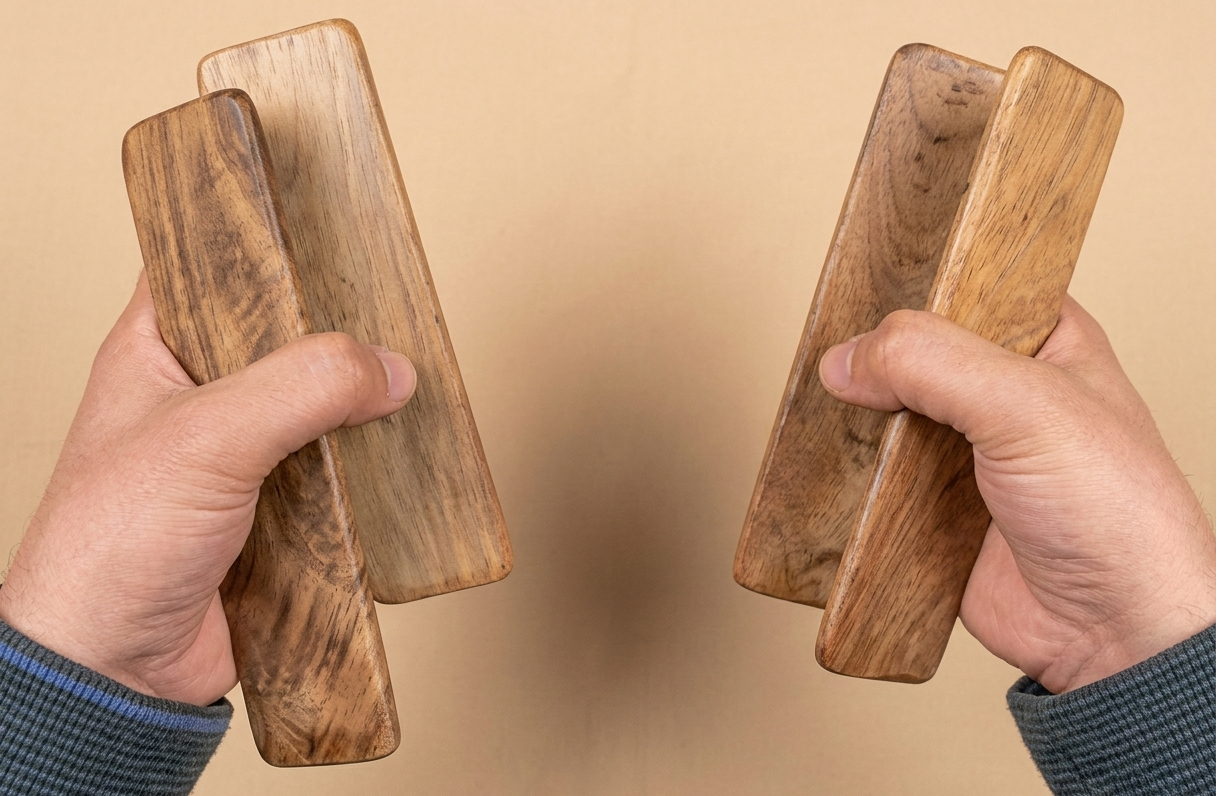
Pick up two flat pieces of Sheesham wood. Hold them loosely between your fingers. Clap them together. That’s it. That’s the Khartal. And yet, in the hands of a Manganiyar master from the Thar Desert, those two unremarkable pieces of wood will make you forget where you are, stop your conversation mid-sentence, and feel something ancient stir inside you. No strings. No membranes. No electronics. Just wood, rhythm, and centuries of devotion.

The Khartal — derived from the Sanskrit words Kara (hand) and Taal (rhythm) — is one of India’s most ancient percussion instruments, and arguably its most underrated. While the tabla and sitar have conquered global concert halls, the Khartal has remained quietly rooted in the dust and devotion of Rajasthan, passed from hand to hand across generations, carrying within its simple wooden form an entire civilisation’s memory of faith, community, and survival.

Roots in Devotion — The Origins of Khartal

The Khartal’s origins are inseparable from the tradition of bhakti — the devotional movement that swept across medieval India between the 12th and 17th centuries. Wandering saints, mystics, and poet-singers known as bhaktas needed an instrument that was portable, inexpensive, and capable of producing rhythmic accompaniment to their devotional songs. The Khartal was the answer. Light enough to carry on foot across the subcontinent, simple enough to be made from a fallen branch, and expressive enough to hold a crowd in silence.

The instrument finds particular resonance in the legacy of Mirabai — the 16th-century Rajput princess-turned-mystic poet whose devotional songs to Lord Krishna are among the most beloved in Indian literature. Mirabai is said to have performed her bhajans accompanied by the clapping of wooden pieces — an early form of the Khartal. Her tradition of ecstatic, rhythmic devotion laid the cultural groundwork upon which the instrument’s role in Rajasthan would be built for centuries to come.

“In the hands of a Manganiyar master, those two pieces of Sheesham wood stop being an instrument. They become a conversation between the musician, the divine, and everyone in the room.”

Over time, the Khartal evolved from a simple devotional tool into a sophisticated percussion instrument capable of producing complex rhythmic patterns, intricate ornamentations, and even melodic suggestion through tonal variation. Master players developed the ability to produce multiple distinct sounds from a single pair — a sharp crack, a deep resonant thud, a sliding tone — simply by adjusting the angle, pressure, and movement of the wrist. What looks like effortless clapping is, in reality, a lifetime of practice.

The Langa and Manganiyar — Keepers of the Flame

If the Khartal has a true home, it is among the Langa and Manganiyar communities of western Rajasthan — particularly in the districts of Jaisalmer, Barmer, and Jodhpur. These are hereditary musician communities whose identity, livelihood, and spiritual life are inseparable from music. For them, music is not a profession in the modern sense. It is seva — service. It is the thread that connects the living to their ancestors, communities to their patrons, and the earthly to the divine.

The Manganiyar community has carried the Khartal as one of its signature instruments for generations. Their music is a glorious fusion — the haunting Kamaicha string instrument, the thunderous Dholak, the Morchang jaw harp, powerful vocals, and above all, the insistent, hypnotic click-clack of the Khartal holding everything together like a rhythmic spine. Manganiyar performances are not concerts in the Western sense. They are communal experiences — gatherings of memory, celebration, and devotion where the boundary between performer and audience dissolves entirely.

Traditionally, these musicians performed at weddings, birth ceremonies, harvest festivals, and in the courts of Rajput nobles. The relationship between musician and patron was sacred — the Manganiyar would sing the patron’s genealogy, bless his household, and mark every important life event with music. In return, the patron provided grain, land, and protection. This Jajmani system sustained the community for centuries.

The Instrument Itself — More Than Meets the Eye

A traditional Khartal consists of two flat rectangular pieces of Sheesham wood (Indian Rosewood — Dalbergia sissoo), typically 18 to 25 centimetres long, smoothed and sometimes slightly curved at the edges. The density and grain of the wood determines the tonal quality — seasoned Sheesham produces a warm, resonant sound, while harder woods give a sharper percussive crack. Some players prefer pairs made from different wood types to access a wider tonal range.

The Khartal is held between the fingers of both hands — typically two pieces per hand, though some performers use a single pair. The technique involves an extraordinary range of micro-movements: the fingers act as springs, allowing the pieces to resonate freely after each strike rather than being damped. Advanced players can produce rapid-fire rhythmic patterns that rival the speed and complexity of tabla compositions — all while singing simultaneously. A feat of coordination that takes decades to master.

Legendary Masters — The Great Khartal Players

The history of the Khartal is written in the names of the masters who carried it forward. Gazi Khan Barna of Jaisalmer is perhaps the instrument’s greatest living ambassador — having shared the stage with Ustad Zakir Hussain and A.R. Rahman, bringing the Khartal to audiences who had never imagined that two pieces of wood could hold their attention for an hour. His performances are legendary — a blizzard of rhythm, grace, and joyful abandon that makes the complex look effortless.

Bhungar Khan Manganiyar, recipient of the prestigious Sangeet Natak Akademi Award — India’s highest honour in the performing arts — represents another pinnacle of mastery. His playing carries the full weight of the Manganiyar tradition: deeply devotional, technically flawless, and emotionally overwhelming. Barkat Khan and Sattar Khan are among the other revered names whose artistry has shaped how the instrument is played and taught today. The late Ustad Bismil Khan remains a towering historical figure — a musician whose influence on the Khartal tradition continues to be felt in the playing of every serious practitioner.

🏆 Legendary Khartal Masters

  • Gazi Khan Barna — Jaisalmer’s master; performed with Zakir Hussain & A.R. Rahman
  • Bhungar Khan Manganiyar — Sangeet Natak Akademi Award recipient
  • Barkat Khan — Celebrated Manganiyar virtuoso
  • Sattar Khan — Revered folk musician of the Thar tradition
  • Ustad Bismil Khan (late) — Historical giant whose legacy shapes the tradition today

The Khartal Today — Between Survival and Revival

The Khartal and the communities that play it stand at a crossroads. On one hand, there is genuine global interest — international folk festivals like RIFF (Rajasthan International Folk Festival) in Jodhpur bring Manganiyar and Langa musicians to audiences across Europe, America, and Asia. UNESCO’s recognition of this tradition as an Intangible Cultural Heritage has lent it institutional prestige and international visibility.

On the other hand, the economic foundations of the tradition are fragile. Young musicians face the pull of urban employment, the decline of the traditional Jajmani patronage system, and the challenge of monetising a tradition in a streaming economy that rarely rewards depth and specificity. The instruments, the songs, the rhythmic systems — all transmitted orally, from elder to child — and the chain is only as strong as its weakest link.

This is why documentation, appreciation, and genuine engagement from audiences matter. Every time you share a Khartal performance, attend a folk festival, or simply tell someone about this tradition — you are participating in its survival.

Why the Khartal Matters

There is something quietly radical about the Khartal. In a world drowning in electronic sound and studio-polished production, here is an instrument that needs nothing — no power, no amplification, no technology. Just wood, air, and human skill. It is a reminder that rhythm is not invented; it is remembered. That music, at its most essential, is a human body in conversation with time.

The Khartal is also a reminder of what culture means at the community level — not a museum piece or a heritage brand, but a living practice that feeds families, marks births and deaths, celebrates love, and carries the names of the dead forward into the future. The Manganiyar musicians are not performing history. They are living it — and with every clap of those two pieces of Sheesham wood, insisting that it continues.

So the next time you hear the Khartal — in a performance, a recording, or a crackling video filmed at a Rajasthani wedding — stop what you are doing. Listen. Let those two wooden pieces do what they have always done. Let them remind you that the most profound things in this world are often the simplest ones.

✦ ✦ ✦

🎬 Watch & Be Mesmerised

Two performances that will change how you hear rhythm forever.

🌾 Your Turn — Keep the Tradition Alive

Who is your favourite Khartal player? Do you have a memory, a story, or a name we haven’t mentioned? Drop it in the comments — let’s build a living archive of this extraordinary tradition together.

Uncategorized

Variations Exist — But Preservation Still Matters

It is important to say this clearly:
Multiple versions of Rajasthani folk songs have always existed, even long before recordings, studios, or social media.

Old singers themselves carried variations — shaped by:

  • region
  • community
  • oral transmission
  • memory

These versions are genuine, not incorrect. They grew naturally, without breaking the song’s soul.

What matters is how a song changes.

Organic Change vs. Manufactured Change

Traditional variations happened because:

  • singers learned by listening, not copying
  • lyrics were remembered, not written
  • meaning stayed intact even when words shifted

Today, many changes happen for different reasons:

  • speed and virality
  • copyright ownership
  • market visibility
  • algorithm-friendly hooks

This shift is subtle, but important.

When a song is shortened, reworded, or musically altered only to fit platforms or claim ownership, it stops being a living tradition and starts becoming a product.

A Gentle Word to the New Listener (and Gen-Z)

Modern listeners often discover folk music through:

  • reels
  • DJ versions
  • cinematic adaptations

There is nothing wrong with discovering folk this way.
But discovery should be the beginning, not the end.

Before modifying, remixing, or rewriting, there is immense value in:

  • listening to older renditions
  • understanding original lyrics
  • hearing the instruments as they were played
  • absorbing the silences, pauses, and rawness

These are not outdated sounds —
they are cultural memory.

Once a lyric is lost,
once a metaphor disappears,
once a community context fades —
it rarely returns.

Why Preserving Original Lyrics Is Critical

Many folk songs today survive only in fragments:

  • missing verses
  • altered meanings
  • broken narratives

Your grandparents may have known lines that no longer exist online.

Preserving lyrics is not about nostalgia.
It is about respecting inheritance.

A song does not belong to one performer, label, or era.
It belongs to the land, the people, and time itself.

This Website’s Standpoint

This platform exists with a clear intention:

  • to document what still survives
  • to recover what is fading
  • to present songs with context, not compression

Modern interpretations may come and go.
Trends will change.

But the original words —
the metaphors shaped by desert, rain, longing, devotion —
are irreplaceable.

Innovation has space.
Fusion has space.
But preservation must come first.

Because only when roots remain visible
can new branches grow honestly.

Uncategorized

The Rajas of Marwar: A Saga of Valor, Vision, and Living Legacy

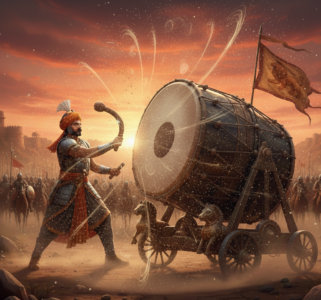
Marwar—land of blazing sands, impregnable forts, and unyielding courage—has been shaped by generations of Rathore rulers whose lives blended valor, wisdom, devotion, and statecraft. From the thunderous call of war drums to the measured silence of diplomacy, the Rajas of Marwar carved their legacy into the soul of Rajasthan. Their glory lives on in folk memory, especially in songs like “Dhuso Bage Re Rathod Ravli Marwar Ko”, declaring that when the mighty Dhuso war drum is played, the fame of Rathore bravery spreads in all ten directions.

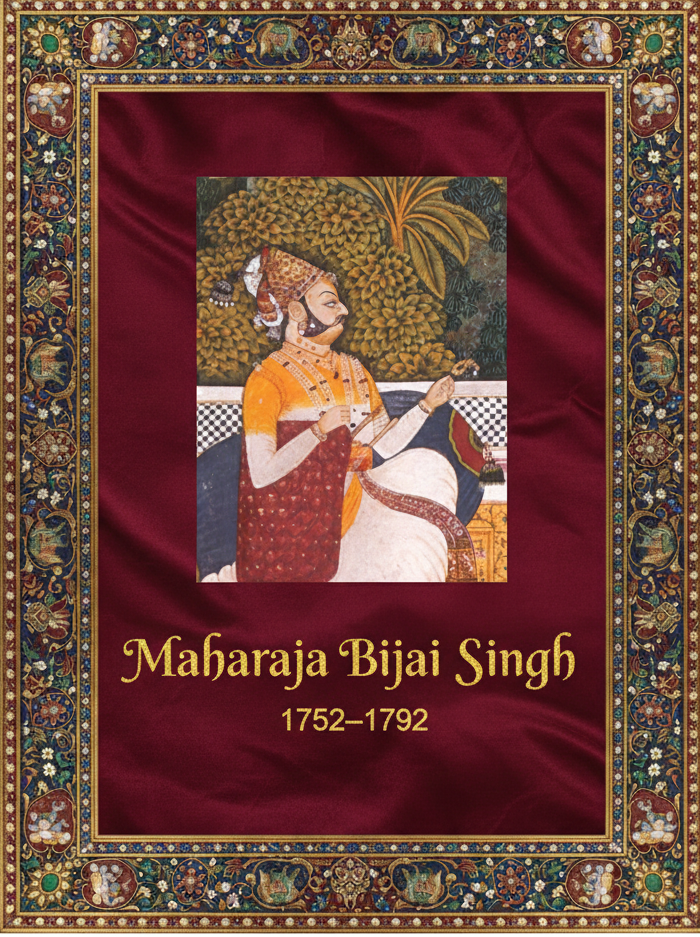
Maharaja Bije Singh

Maharaja Bije Singh (1752–1792)

Maharaja Bije Singh ruled when Marwar stood surrounded by ambition and intrigue. A fearless warrior and firm administrator, he restored order after years of instability and reasserted Rathore authority with quiet confidence. His reign strengthened the military defenses of Jodhpur, reinforced loyalty among nobles, and upheld the sacred Rathore code of honor—where sovereignty was defended not just by sword, but by unwavering resolve.

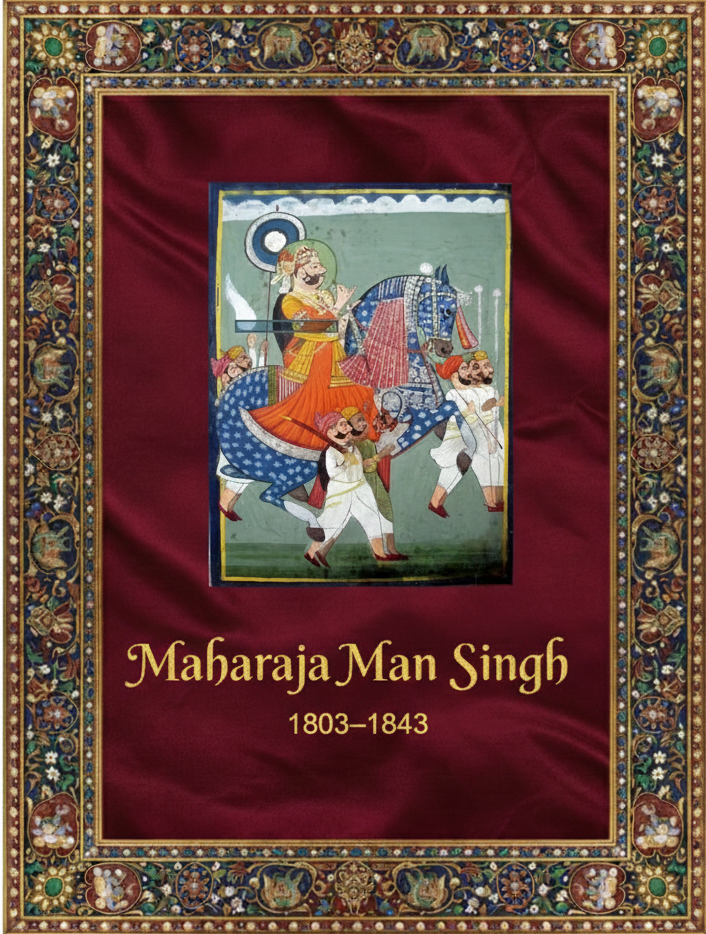
Maharaja Man Singh

Maharaja Man Singh (1803–1843)

Maharaja Man Singh was a rare union of king and sage. Deeply spiritual and scholarly, he was a devoted Shaivite who authored revered devotional works. Under his patronage, temples, manuscripts, and sacred traditions flourished. Even as external powers expanded influence, he preserved Marwar’s cultural soul—rooted in faith, learning, and inner strength.

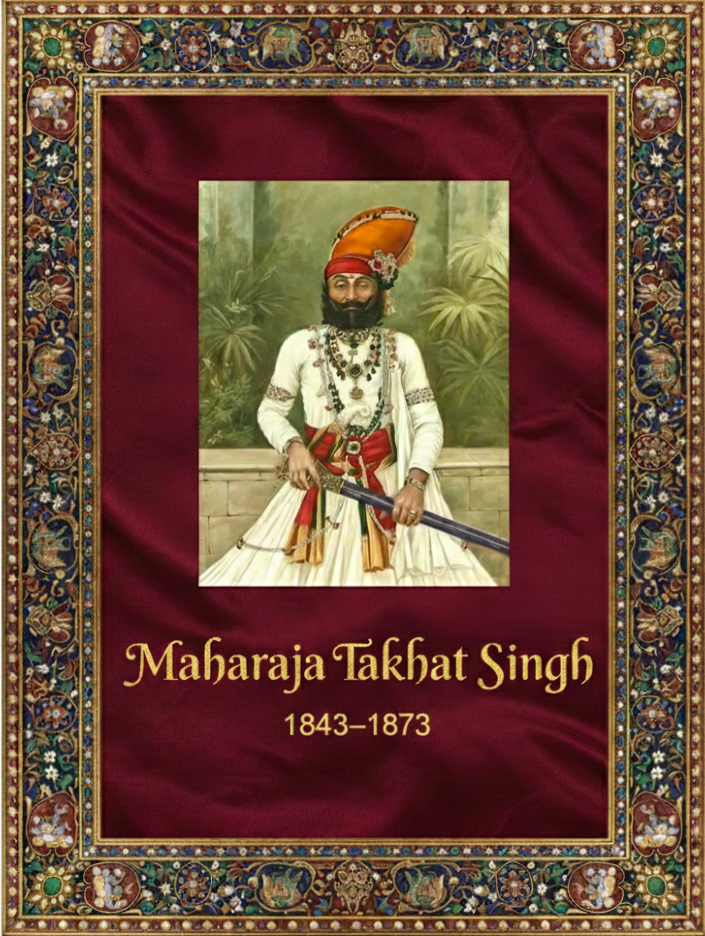
Maharaja Takhat Singh

Maharaja Takhat Singh (1843–1873)

Decisive, disciplined, and politically astute, Maharaja Takhat Singh restored stability to Marwar during a sensitive era. His reign emphasized governance, justice, and administrative strength. Balancing diplomacy with firmness, he ensured peace without surrendering pride—marking a vital transition from turbulence to structured rule.

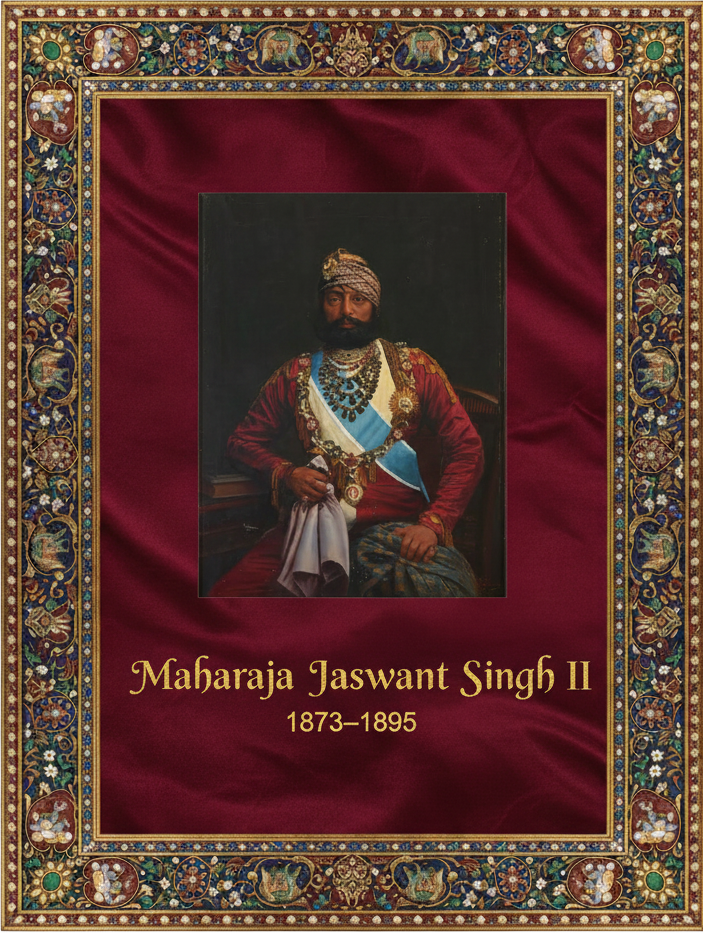
Maharaja Jaswant Singh II

Maharaja Jaswant Singh II (1873–1895)

A visionary reformer, Maharaja Jaswant Singh II guided Marwar into modernity. Railways connected regions, irrigation revived agriculture, courts strengthened justice, and education empowered society. His reign harmonized tradition with progress, ensuring Marwar advanced without losing its proud cultural identity.

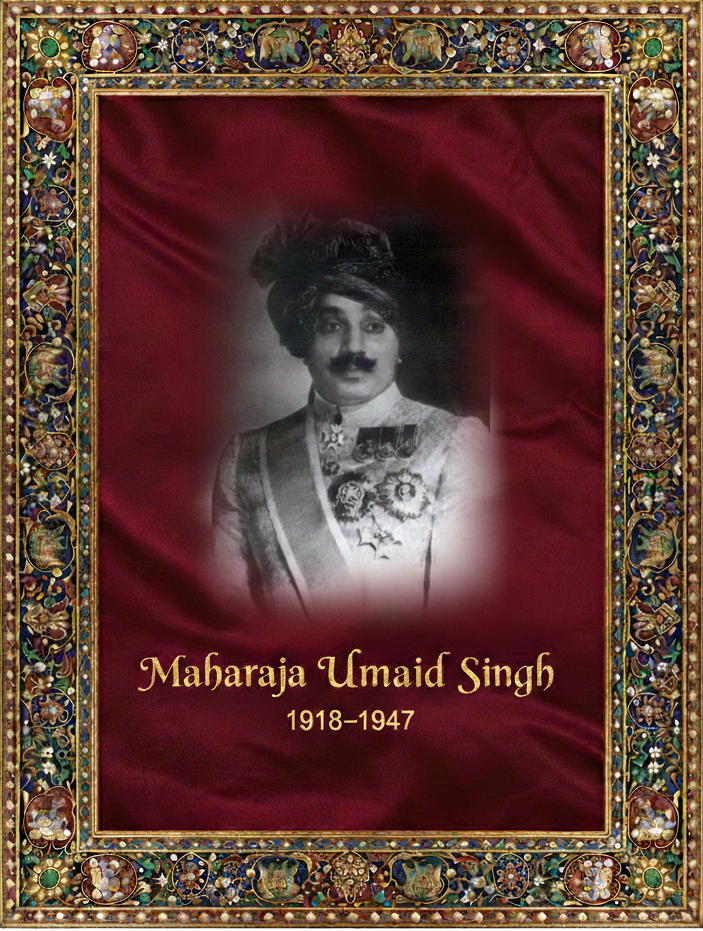
Maharaja Umaid Singh

Maharaja Umaid Singh (1918–1947)

Maharaja Umaid Singh is remembered as a compassionate visionary. During devastating famines, he transformed adversity into hope by commissioning the Umaid Bhawan Palace—providing employment and dignity to thousands. His reign strengthened healthcare, infrastructure, and public welfare, earning enduring reverence.

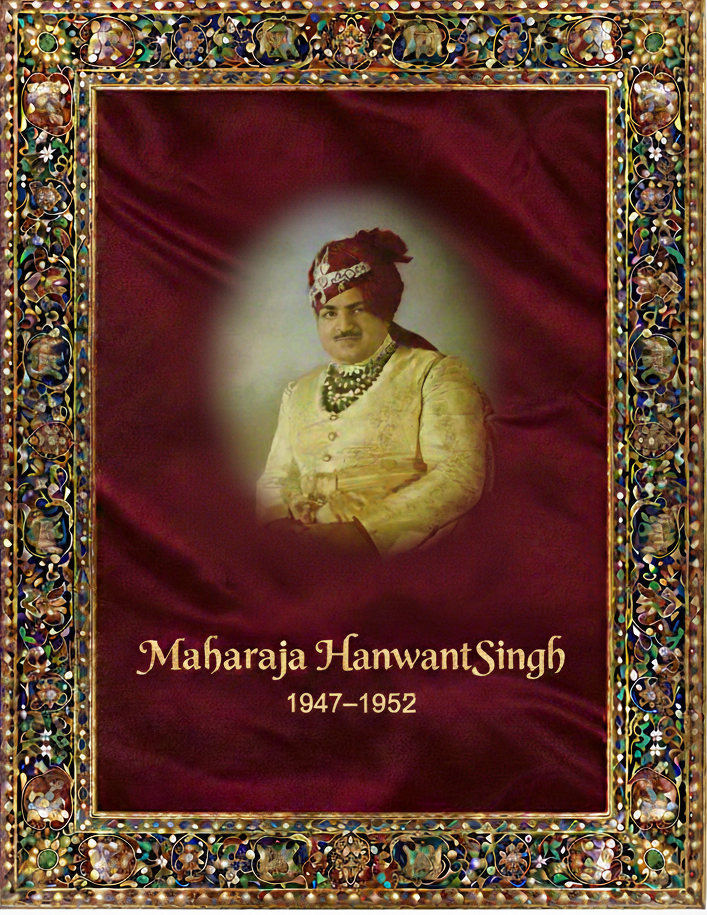
Maharaja Hanwant Singh

Maharaja Hanwant Singh (1947–1952)

Ruling at the moment of India’s independence, Maharaja Hanwant Singh led with courage and clarity. He ensured Marwar’s dignified integration into the Indian Union while safeguarding regional honor. Though brief, his reign carried historic weight and resolute leadership.

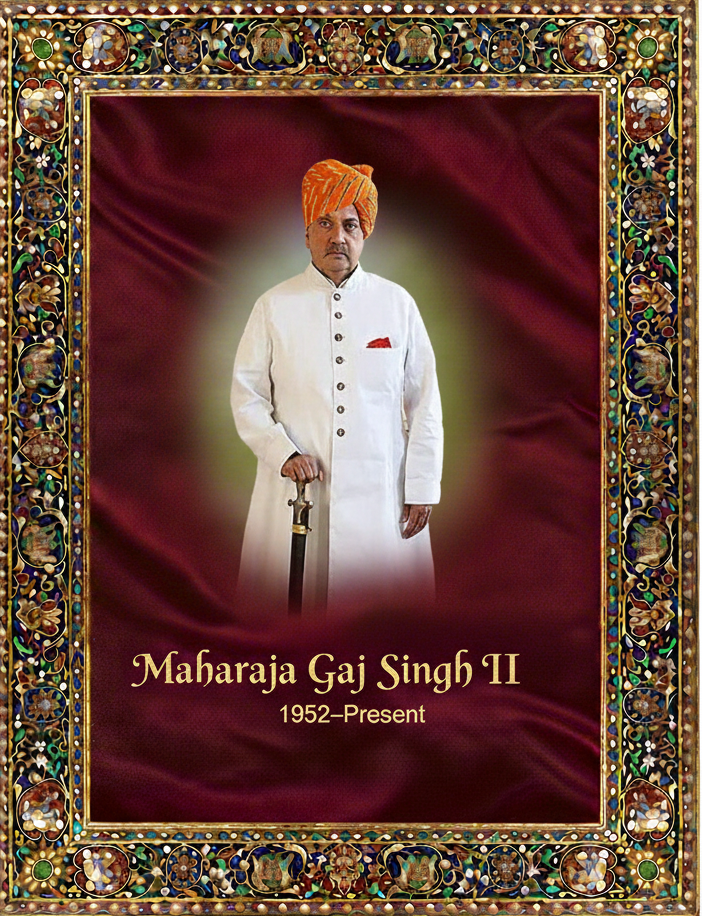
Maharaja Gaj Singh II

Maharaja Gaj Singh II (1952–Present)

Maharaja Gaj Singh II stands as the modern custodian of an ancient legacy. A statesman, conservationist, and cultural ambassador, he has dedicated himself to heritage preservation, ecological responsibility, and social service—embodying enlightened stewardship in modern India.

Echoes in Folk Memory

The valor of Marwar’s rulers lives vibrantly in folk traditions. Songs like “Dhuso Bage Re Rathod Ravli Marwar Ko” are living chronicles, declaring that when the Dhuso war drum sounds, the glory of Rathore bravery echoes in all ten directions—timeless and unbroken.

A Glory Beyond Centuries

These Rajas represent only a few shining chapters from Marwar’s long and illustrious history. The Rathore lineage stretches back many centuries—far beyond recorded memory—rooted in sacrifice, honor, and unyielding pride. From ancient battlefields to modern cultural guardianship, the spirit of Marwar endures, eternal and undefeated.

Uncategorized

Words That Hold Desert Memory

Understanding Rajasthani Folk Songs Beyond Translation

Rajasthani folk songs are not built on melody alone. They stand on a carefully regulated vocabulary shaped by kinship rules, caste structures, migration, devotion, and gender etiquette. Many words that appear repeatedly in folk songs are not interchangeable with Hindi. Translating them loosely does not simplify meaning — it erases cultural intelligence.

This blog introduces a small but important set of such words, showing how and why they are used, and what collapses when they are misunderstood.


Speaking of the Spouse Without Naming Them

One of the most misunderstood expressions in Rajasthani folk is “Baisa Ra Beera / Nanad Ra Beera.”

Literally, these mean:

  • Baisa Ra Beera — brother of my husband’s sister
  • Nanad Ra Beera — brother of my sister-in-law

Culturally, both mean: husband, referred to indirectly.

In traditional Rajasthani society, a wife does not take her husband’s name. Direct naming is considered socially improper. Instead, she speaks through kinship geometry. When a song says:

“Kurjan, mharo bhanwar milai dijo aaj…”

the word bhanwar (husband, groom) is itself respectful and elevated — and often still avoided directly in favor of kinship terms like Baisa Ra Beera. Emotion is expressed through restraint, not declaration.


Respect Is Mutual: Husbands Also Avoid Names

An often-missed detail: this restraint is not one-sided.

In many Rajasthani folk songs, husbands also do not call their wives by personal names. Instead, they use respectful, affectionate terms:

  • Gori – fair one, dignified wife
  • Sundar Gori Re – beautiful, virtuous wife
  • Bhartari – wife, partner in life-dharma

These are not casual endearments. They acknowledge the wife’s status, grace, and role, not possession. Folk songs preserve a world where intimacy exists without verbal exposure.


Words Used for Husband: Nuance, Not Redundancy

Rajasthani folk uses multiple words for “husband,” each carrying contextual weight:

  • Bhanwar / Bhanwar Sa – groom, noble husband
  • Dhola – fair, cherished husband (often in virah)
  • Balma – beloved, emotionally close
  • Sajna / Sajna Sa – affectionate, intimate address

These are not synonyms. A woman waiting uses dhola or balma; a celebratory song uses bhanwar sa. Vocabulary shifts with emotion.


Identity Through Lineage, Not Personal Names

Women in Rajasthani folk are often identified through marital lineage, not individual naming:

  • Rathodi – wife of a Rathore
  • Bhatiyani – wife of a Bhati
  • Sisodini – wife of a Sisodia

These are honorific identities, not surnames. They embed the woman within historical memory, sacrifice, and clan ethics, preserving dignity through anonymity.


Birds That Carry News, Not Decoration

Birds in Rajasthani folk are narrative agents, not ornaments.

Kurjan (Demoiselle Crane) is addressed directly because it migrates vast distances. A woman sings:

“Kurjan, mharo bhanwar milai dijo aaj…”

The bird becomes a bridge between separated lives. Translating kurjan as merely “a crane” removes its emotional function.

Similarly:

  • Mor / Morni (peacock) appear with rain, desire, fertility.
  • Koyal (cuckoo) sharpens longing by announcing spring without reunion.

Seeing, Waiting, and the Weight of Time

Rajasthani has layered words for “seeing”:

  • Dekhan – to see
  • Takni – to look repeatedly
  • Nirkhan – to gaze with devotion and waiting

When a song says a woman nirkhe raah, it implies seasons of waiting, not a glance. Time itself is encoded in the word.


Memory That Hurts: Olyundi and Birah

Olyundi is not simple memory. It is ache-filled remembrance, often surfacing during routine tasks or silence.

Birah (Virah) is not mere separation. It is a sanctified emotional state, where longing becomes endurance. Folk tradition treats birah as transformative, not tragic.


Color as Prayer, Not Description

When songs praise Kesario Bano or Hariyalo Bano, color becomes spoken blessing:

  • Kesario (saffron): valor, survival
  • Hariyalo (green): fertility, continuity

Women sing color to protect the absent husband.


Devotional Vocabulary: Folk Spiritual Intelligence

Rajasthani folk seamlessly blends devotion with daily life:

  • Guru – not teacher, but spiritual axis
  • Jhini Jhini – subtle, layered, between-the-lines knowledge
    (like maheen in Urdu, but spiritually coded)
  • Gorja / Gauri – Parvati as nurturing Shakti
  • Bholanath – Shiva in his compassionate form
  • Maay / Maayad / Maa – Shakti, not just mother

When a song speaks of jhini jhini baat, it refers to wisdom given indirectly, often by the Guru — knowledge felt, not announced.


Why This Vocabulary Matters

Rajasthani folk songs do not explain emotion. They encode it through:

  • kinship discipline
  • mutual respect between genders
  • historical absence and migration
  • devotional subtlety

Replace these words casually, and the song survives — but the culture does not.


A Closing Note

This list is very small — just a drop in the ocean of Rajasthani folk vocabulary.

If you know a word and want to share its meaning,
or want to understand a word you’ve heard in a song,
just comment below.

Folk knowledge survives only when it is spoken, questioned, and remembered.

Uncategorized

Love Spoken Softly: Marital Emotion in Rajasthani Folk Songs

Rajasthani folk songs express a form of love that is quiet, contained, and deeply rooted in dignity. It does not announce itself through grand gestures or open declarations. Instead, it lives in silence, patience, and emotional depth. These songs come from a time when women often lived in their in-laws’ homes, always draped in poshākh or saree, faces veiled from strangers, and feelings carefully guarded. Yet within these limits, marital affection thrived—full of longing, respect, and an unspoken bond.

A single couplet captures this sensibility with striking simplicity:

“साजन गली सँकड़ी तो सामना मिल गया सैं,
हँसया पर बोल्या नहीं, म्हारा नीचा कर गया नैन।”

The lane is narrow; there is no way to avoid crossing paths. The husband smiles but does not speak. The wife responds by lowering her eyes. No words are exchanged, yet everything is understood. Love here is not declared—it is acknowledged through conduct.

Across Rajasthani folk traditions, the wife never takes her husband’s name. He becomes Sajan, Balma, Bhartar, Pihūji, or Baisa ra Beera. This absence of naming is not distance, but reverence. The bond is so complete that identity is implied, not spoken. Respect itself becomes the language of closeness.

The well-known narrative of Moomal and Mahendra occupies a special place in this tradition. Though their story is shaped by destiny and separation, the emotional tone remains refined and restrained:

“लिख्या विधाता लेखड़ा, मूमल राणा महेंद्रां।”

Fate itself is said to have written their bond. Moomal’s longing is not loud or bitter; it is steady, dignified, and deeply felt. When she calls out:

“अरे राणा राणा ओ रे…”

it is an invocation filled with remembrance and devotion, not complaint. The folk imagination presents her as emotionally rich yet composed—never crossing into accusation or despair.

This inner discipline becomes even more visible in moments of separation. One poignant couplet says:

“सजना यूँ मत जणियो, थां बिछड़्यां मोहे चैन,
जैसे जल बिना माछली, तड़पत रई दिन रैन।”

Here, the wife asks her husband not to assume she is at peace while apart. Without him, she is like a fish without water—restless day and night. The pain is honest, yet expressed with humility. Longing is voiced, but dignity remains intact.

Nature often carries what words cannot. Clouds, stars, and evening become emotional companions:

“दल बादल बीच चमक्‍या जी तारा,
सांझ पड़या पिहूजी लागे ओ प्यारा।”

As dusk falls and a star glimmers between clouds, the beloved feels nearer. Time itself becomes a vessel for feeling.

Among the most evocative symbols in these songs is the kurjan, the demoiselle crane. When the woman cannot travel or speak freely, the bird becomes her messenger. In a deeply moving image, she says:

“चोंच ऊपर लिखण गोरी हांजी ओलमा,
पंखडिया पर लिखा सात सलाम,
कुरजां रे म्हारो भंवर मिलाई दिज्यो आज।”

She imagines writing her complaints on the bird’s beak and inscribing seven salaams—seven praises of her husband—on its feathers, so that when the kurjan reaches him, he receives both her pain and her reverence together. Even her grievances travel wrapped in honor. Praise and longing move side by side, never one without the other.

Gentle hesitation also finds its place:

“काईं रे जवाब करूं रसिया,
ओ कीसो रे मिजाज करूं रसिया।”

Here, the wife pauses—not because she lacks feeling, but because feeling is too precious to release carelessly. Silence again becomes expression.

What is striking in these folk traditions is what they do not contain. There is no bitterness, no betrayal, no rancor. Separation does not turn into resentment. Love remains steady, even across distance. The woman waits, sings, remembers, and trusts.

Closing: When Silence Becomes Expression

Together, the narrow lane, the lowered eyes, Moomal’s remembered call, the evening star, the kurjan, and the seven salaams form a complete emotional grammar. These symbols allow marital love to exist fully without ever crossing dignity. Rajasthani folk songs remind us that affection does not need display—it needs , patience, respect, and depth, virah bhaav. In their quiet strength, these songs preserve a timeless understanding of companionship that endures without raising its voice.


Few Song References:

Uncategorized

Instruments of Rajasthani Folk Music

Sound, Storytelling, and Living Traditions of the Desert
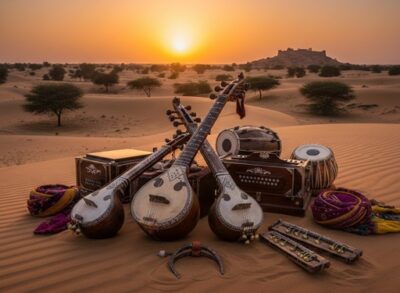
Rajasthani folk music is inseparable from its instruments. Shaped by desert life, royal patronage, and devotional storytelling, these instruments are not merely used to create melody or rhythm—they serve as living voices of memory, ancestry, and survival. In a land where oral tradition carried history forward, instruments became storytellers in their own right.

Each folk instrument belongs to a lineage. Specific communities and clans have traditionally safeguarded the knowledge of crafting, tuning, and playing them, passing this wisdom across generations as both a means of livelihood and a cultural inheritance. The music, therefore, is never detached from the people who play it—it is deeply personal, communal, and rooted in identity.

The musical language of Rajasthani folk is highly evolved. Vocal phrases are often naturally aligned with instruments like the kamaicha, where pitch, tone, and emotional phrasing move in unison. Rhythmic structures that appear as complex laggi, kaida, and taals in classical traditions are rendered organically on folk instruments such as the dholak, developed through lived performance rather than written notation. Instruments like the khadtal do not merely keep time; they engage in intricate rhythmic conversations, complementing and interweaving with the dholak’s patterns.

While modern interpretations may blend these instruments with beatboxing, fusion percussion, or electronic elements, this blog focuses on the original and raw foundations of Rajasthani folk instrumentation—the sounds as they have existed in courtyards, deserts, temples, and village gatherings. Understanding these instruments is essential to understanding the songs themselves, for in Rajasthani folk tradition, the instrument is not an accompaniment—it is the soul of the music.

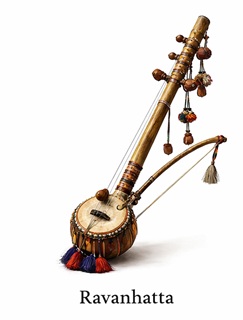
Ravanhatta

Ravanhatta

One of the oldest bowed string instruments of India, the Ravanhatta features a bamboo neck and a coconut-shell resonator covered with hide. Played primarily by the Bhopa community, it accompanies epic performances of Pabuji and Devnarayan, producing a raw and haunting tone suited to narrative singing.

Kamaicha

Kamaicha

The Kamaicha is a deep, resonant bowed instrument carved from mango wood and goatskin. Central to the Manganiyar tradition, it carries wedding songs, praise poetry, and spiritual compositions once performed in royal courts.

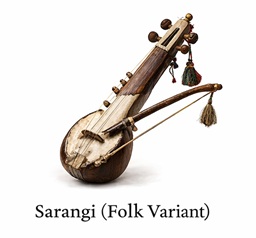
Sarangi

Sarangi (Folk Variant)

The Rajasthani sarangi closely follows the human voice. Used by both Manganiyar and Langha musicians, it enriches emotional depth and supports improvisation in folk melodies.

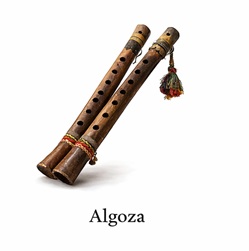
Algoza

Algoza

A unique double flute requiring circular breathing, the Algoza produces melody and drone simultaneously. Favoured by the Langha community, it reflects pastoral life, desert travel, and spiritual longing.

Morchang

Morchang

A metal jaw harp that creates rhythmic vibrations, the Morchang is used by Manganiyar singers for texture and rhythm. Its minimal form hides its powerful ability to shape groove and mood.

Khartal

Khartal

Wooden castanets played with rapid finger techniques, Khartal is strongly associated with Bhopa and Kalbelia performers, adding complex rhythmic patterns to storytelling and dance.

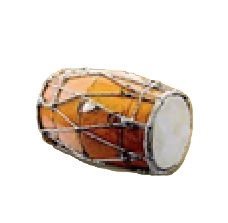
Dholak

Dholak

A two-headed hand drum used across Rajasthan, the Dholak anchors folk performances with steady rhythm and accompanies celebrations, rituals, and devotional singing.

Uncategorized

You’ve Heard Kesariya Balam. But Have You Really Listened to It?

If you have ever spoken about Rajasthani folk music—even casually—you have almost certainly heard Kesariya Balam.
It surfaces everywhere: concerts, documentaries, cultural festivals, school functions, even airport welcome ceremonies. Over time, it has been conveniently labelled as a “welcome song.”

But Kesariya Balam is not a welcome song.
Calling it that flattens its emotional depth, strips it of context, and disconnects it from the lived realities of Rajasthan’s desert culture.

To understand the song, we must first unlearn how we have been taught to hear it.


Not a Greeting, But a Call Across Distance

At its heart, Kesariya Balam is a call—not a greeting.
It is sung from a place of waiting, not welcoming.

The words are an address to balam—the beloved, the traveller, the one who has gone far away. In Rajasthan’s history, separation was not symbolic; it was routine. Men left their homes for trade, war, service, grazing lands, or distant courts, often for years. There were no dates of return, no letters, no assurances—only waiting.

Kesariya Balam emerges from this uncertainty.

The song does not say: “You have arrived.”
It says: “Come back.”

And that single shift—from arrival to longing—changes everything about how we should hear it.


The Colour “Kesariya” Is Not Decorative

“Kesar” (saffron) in Rajasthan is layered with meaning.
It signifies renunciation, sacrifice, warmth, and devotion. When the beloved is addressed as Kesariya, it is not merely about attire or colour—it is about identity shaped by distance.

This is a song that holds:

  • longing without complaint
  • devotion without possession
  • love without certainty

It is dignified yearning, not emotional display. That restraint is deeply Rajasthani.


Raag Mand: The Soul Behind the Song

One cannot speak of Kesariya Balam without speaking of Raag Mand.

Raag Mand is not just a musical scale—it is the sonic identity of Rajasthan.

Unlike dramatic or heavily ornamented ragas, Mand carries:

  • softness
  • nostalgia
  • gentle ascent and descent
  • an emotional colour that feels like late evening in the desert

Mand does not rush. It allows silence. It allows breath.

This is why it suits songs of viraha (separation) so naturally. The notes seem to hover, much like waiting itself. When sung properly, Mand creates the feeling that the song is remembering something, not announcing something.

Over centuries, countless Rajasthani folk songs—across Marwar, Shekhawati, Jaisalmer, Barmer—have been shaped around Raag Mand. Kesariya Balam simply became the most widely heard expression of it.

So when you hear Mand, you are not just hearing melody—you are hearing desert memory.


From Courtyards to Stages: What Changed

Traditionally, Kesariya Balam was sung in:

  • quiet domestic spaces
  • late evenings
  • intimate gatherings
  • moments of emotional pause

It was never meant to be loud or performative.

Modern adaptations—beautiful as some of them are—shifted the song into brighter tempos, fuller orchestration, and public stages. Over time, the emotional context faded, and the song became a symbol, not a story. That is how it acquired the “welcome song” tag—because it sounds inviting, even though it feels wistful.

But folk music is not just about sound. It is about why it was sung.


What To Listen For, Next Time

The next time you hear Kesariya Balam, pause before reacting to it as background music.

Listen for:

  • the gentle pull of notes rather than sharp peaks
  • the space between lines
  • the absence of celebration
  • the quiet dignity of longing

Recognise Raag Mand beneath it—the same emotional grammar that flows through many Rajasthani folk compositions.

When you do that, the song changes.

It no longer welcomes you.
It invites you to wait.

And once you hear it that way, you will start recognising Mand everywhere—in other folk songs, in fragments of melody, in that unmistakable Rajasthani feeling that cannot be translated, only felt.

Next time you hear Kesariya Balam, you won’t just know the song.
You’ll know what you are listening to.

Uncategorized

You Get What You Seek: Following Voices Across Sand, Memory, and Time

Some journeys begin with maps.
Mine began with voices.

For more than thirty years, Rajasthani folk music has been part of my inner landscape — long before I knew the names of the maestros, long before television occasionally brought them into living rooms, and long before the internet made discovery easier. In those early years, there was no way to “look up” a song. You heard it once — in a courtyard, at a gathering, during a late evening — and if it stayed with you, it was because it chose to.

Whenever I travelled through Rajasthan, I carried this restlessness with me. I would step into small music and audio cassette shops, trying to search for something I did not yet know how to name. I could not explain what I was looking for — only what I was not. What was available were mostly Bollywood hits or highly commercialised folk compilations, polished and simplified, stripped of the rawness I had grown up hearing. The songs I carried in memory did not sound like these. They were slower, rougher, and heavier with meaning. I grew up listening, absorbing, and wondering. Songs were never entertainment alone; they were carriers of history, devotion, love, and loss. Each line felt older than the singer who sang it. Yet understanding them was never straightforward. Dialects shifted subtly from region to region. Meanings changed with geography and community. A single word could hold a different emotion just a few miles away. Standing in those shops, unable to articulate what I sought, I slowly understood that the music I was searching for could not be bought — it had to be found.

When I wanted to know more, there were no written references. So I searched the only way possible then — by meeting people, by listening again and again, by asking questions to elders that sometimes had no clear answers.

Years later, I would finally learn the names behind some of the voices that had unknowingly shaped my journey — Allah Jilai Bai, Padma Shri Ustad Anwar Khan Manganiyar, Padma Shri Gulabo Sapera, Mame Khan, Gazi Khan Barna, Barmer Boys, Kheta Khan, Titi Robin ,Seema Ji Mishra
On television, I once witnessed a fusion performance featuring Titi Robin — and something clicked. What I had heard in fragments was part of a much larger, living tradition.

But long before these names became familiar, there were countless performers whose names I never knew.

I remember hearing music in the forts of Jodhpur Fort, Udaipur, and Jaisalmer — musicians playing not for recognition, but because that was how their world breathed. Some belonged to communities I would learn about much later, like the Manganiyar and Langa traditions. Back then, their histories were largely unknown to me. Information was scarce. Context came in pieces.

Still, the pull remained strong.

I always wished to visit their villages — to see where these songs were born, to witness their riyaaz, to understand their community life beyond the stage. That desire has stayed with me, even today. Because folk music is never just about melody; it is about people, lineage, and lived discipline passed quietly from one generation to the next.

Over time, a realization became clear: much of this knowledge survives only because someone remembers it.

This website came into being not as a scholarly project or a claim of authority, but as an act of gratitude. It is built from decades of listening, wondering, mishearing, correcting, and learning. Lyrics here are presented as they were encountered — sometimes incomplete, sometimes with variations — because that is how folk traditions truly exist. There is no single “correct” version, only honest ones.

Technology finally gave me the means to gather what memory alone could not safely hold anymore. But the spirit remains old-fashioned: respect the song, acknowledge the singer, and never rush meaning.

Looking ahead, this space will continue to grow with humility. The aim is not expansion for its own sake, but depth — to document more songs, preserve variations, and slowly add context wherever possible. I hope one day to stand in those villages, listen to riyaaz at dawn, and understand these traditions not just as a listener, but as a witness.

Because in the end, I have learned one simple truth:

You get what you seek.
If you seek fame, you may find noise.
If you seek understanding, you find patience.
And if you seek with sincerity, the songs reveal themselves — slowly, generously.


Objective of This Archive

To preserve and document Rajasthani folk songs with their lyrical depth, regional variations, and cultural context — honoring performers, communities, and oral traditions so they continue to live as shared human memory, not forgotten echoes.

Uncategorized

Moomal: The Desert Love Story That Still Echoes Through Rajasthani Folk Music

In recent times, you may have heard the word “Moomal” in Instagram reels, background tracks, or short trending clips.
Maybe it wasn’t the original folk version — but somewhere, its sound has reached you. 🎶

What most people don’t hear is the soul behind the song — the story of love, loss, longing, and separation that shaped one of Rajasthan’s most enduring legends.

This blog explores the real tale of Moomal and Raja Mahendra, the artist who preserved it for our generation, and why such stories matter today.


The Legend of Moomal & Mahendra: A Love That Could Not Return Whole

Moomal was the wise, graceful princess of Lodarva, a historic town in today’s Jaisalmer district.
Raja Mahendra (also known as Mehendravarma) ruled Amarkot in the Sindh region. The desert stretched vast and silent between them, yet their hearts found a way to meet.

Their love story is not the usual folk celebration of romance.
Instead, it is built on:

  • distance,
  • longing,
  • misunderstandings,
  • and the painful silence that often follows pride.

Every retelling of their story ends not with union, but with viraha — the deep emotional separation that defines a significant part of Rajasthani music and poetry.
It is this ache that the song “Moomal – Mahendra” carries within it.
This is not a song meant to entertain you.
It is a song meant to make you pause, remember, and feel.


Dapu Khan Mirasi Manganiyar: The Voice That Gave the Story a Heart

Among the many artists who have kept this legend alive, one voice stands apart:

Late Deepu Khan Mirasi Manganiyar — known lovingly as Dapu Khan 🎻🙏

Born in Khinkali village of Jaisalmer district, Dapu Khan was not just a singer — he was a custodian of the desert’s memory. With the kamaicha in hand, he carried the traditions of the Manganiyar community with honesty and dignity.

Dapu Khan passed away in 2021, leaving behind a silence that felt personal to anyone who has heard him sing. Yet the recordings, memories, and performances he left behind preserve a timeless chapter of folk music.

His rendition of Moomal – Mahendra is considered one of the most authentic and emotionally rich versions.
It stands out because:

  • He shifted the song’s rhythm from a slow six-beat cycle to a faster eight-beat Keharva, without disturbing its emotional essence.
  • He placed the kamaicha at the centre, resisting the modern push toward electronic or digital sounds.
  • He retained the rawness and simplicity of traditional Manganiyar singing, while making it engaging for a younger audience.

Folk artist Gazi Khan Manganiyar often recalls how Dapu ji performed across Jaisalmer’s most iconic spaces — from the Fort to the steps of Gadisar Lake to Patwa Haveli. These weren’t just shows; they were living moments of Rajasthan’s musical heritage.


Why the World Values Our Folk Traditions — Sometimes More Than We Do

One surprising truth about Rajasthani folk music is that foreign listeners and researchers often study it more deeply than we, its inheritors, do.

They document:

  • the stories behind the songs,
  • the raags and taal structures,
  • the lineages of artists,
  • and the cultural context that shaped each composition.

Meanwhile, many of us only hear these songs as background music in short clips.

If we truly knew what these legends represent, we would understand the value of:

  • the communities who sing them,
  • the instruments that shape their sound,
  • the artists who dedicate their lives to preserving them,
  • and the cultural memory that stretches across generations.

Why This Website Exists

This website — rajasthanifolksongs.com — was created with a simple intention:
not as an authority, but as a small contribution to a vast and ancient tradition.

A place to:

  • preserve rare songs,
  • document stories,
  • honour forgotten artists,
  • and help listeners discover the depth behind the music.

Every folk song is a window into a world that once was — and still lives within the people of the desert.
If we don’t listen deeply today,
one day we may be left with nothing more than echoes.

Scroll to Top