“Ghodaliyo / घोडलियो”
Some folk songs do not reveal themselves immediately. They arrive in fragments — half-heard words, stretched syllables, fading pronunciations, and meanings hidden inside regional memory. Ghodaliyo is one such rare Rajasthani folk composition: delicate, layered, and deeply cinematic in emotion.
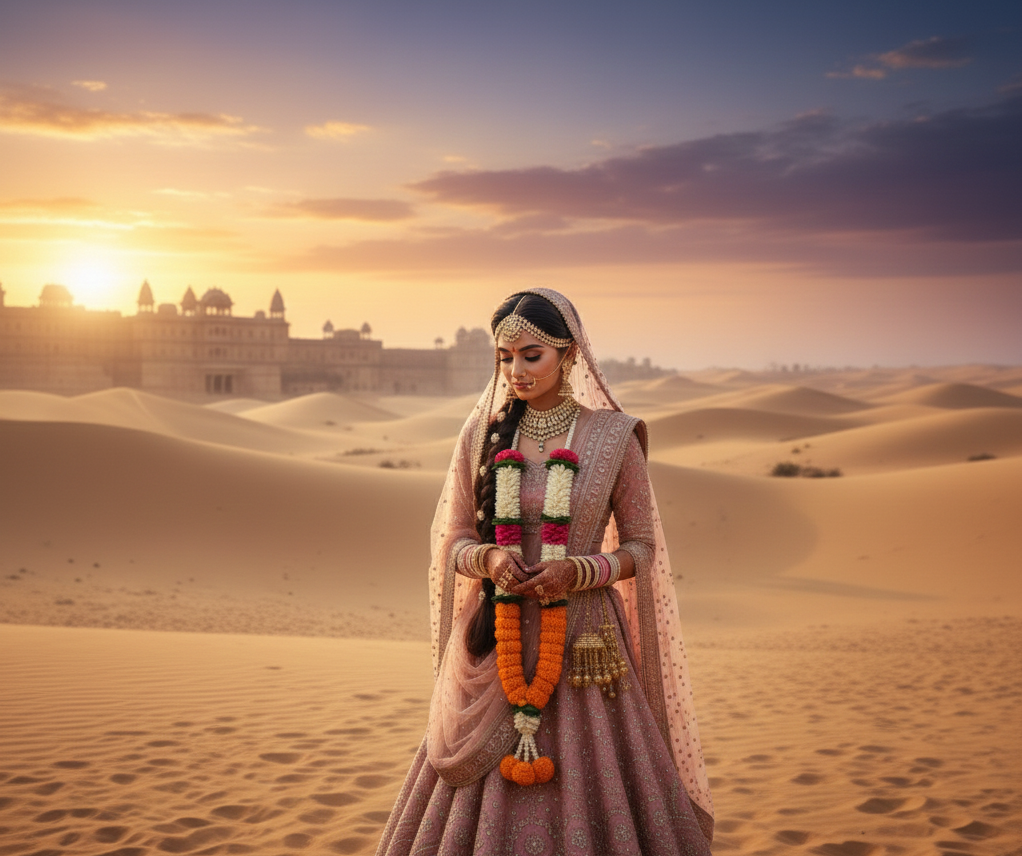
At first hearing, the song appears to celebrate the arrival of a king into a desert fort. Decorated horses, royal courtyards, inner chambers, stables, companions, and ceremonial movement fill the verses with vivid imagery. But beneath that surface lies something far more intimate.
It is a song of longing.
The voice belongs to a queen awaiting her king’s return. Yet, in true folk subtlety, she never openly expresses her yearning directly toward him. Instead, she admires and speaks lovingly of the horse — the royal horse that carries her king.
She calls her companions — “सइयोणी” — and asks them to come see:
- the decorated horse,
- its stable (“कोठड़ी”),
- the hooks where it is tied (“कडयाँ”),
- its hिनहिनाहट echoing through the fort,
- the courtyards and pathways through which it arrives.
But emotionally, every image points toward only one presence: the king himself.
The horse becomes an emotional extension of the beloved. In a culture where royal affection and feminine longing were often expressed with grace and restraint, the queen redirects her emotions toward what remains closest to her husband. Seeing the horse becomes a way of feeling near the king.
And yet, the concealment does not remain complete.
Here, “भंवर” carries the affectionate sense of husband, lord, beloved. The restraint gently breaks, and suddenly the listener realizes that the entire song has been circling around a single desire — the longing to see her king again.
What makes Ghodaliyo especially valuable is not only its emotional depth, but the fact that it survives almost entirely through oral tradition. Songs like these rarely exist in complete written form. Their words shift across regions, singers, generations, and memory itself.
Significant effort went into patiently listening, replaying, comparing, and understanding fragmented phrases from this composition. Many lines carried layered meanings hidden beneath stretched folk pronunciation, dialect variations, and musical ornamentation. The process became less like transcription and more like restoring a fading mural from scattered colors.
Folk traditions preserve history differently from formal records. They preserve feeling. They preserve atmosphere. They preserve how people welcomed, waited, remembered, and loved.