Instruments of Rajasthani Folk Music

Sound, Storytelling, and Living Traditions of the Desert
Rajasthani folk music is inseparable from its instruments. Shaped by desert life, royal patronage, and devotional storytelling, these instruments are not merely used to create melody or rhythm—they serve as living voices of memory, ancestry, and survival. In a land where oral tradition carried history forward, instruments became storytellers in their own right.

Each folk instrument belongs to a lineage. Specific communities and clans have traditionally safeguarded the knowledge of crafting, tuning, and playing them, passing this wisdom across generations as both a means of livelihood and a cultural inheritance. The music, therefore, is never detached from the people who play it—it is deeply personal, communal, and rooted in identity.

The musical language of Rajasthani folk is highly evolved. Vocal phrases are often naturally aligned with instruments like the kamaicha, where pitch, tone, and emotional phrasing move in unison. Rhythmic structures that appear as complex laggi, kaida, and taals in classical traditions are rendered organically on folk instruments such as the dholak, developed through lived performance rather than written notation. Instruments like the khadtal do not merely keep time; they engage in intricate rhythmic conversations, complementing and interweaving with the dholak’s patterns.

While modern interpretations may blend these instruments with beatboxing, fusion percussion, or electronic elements, this blog focuses on the original and raw foundations of Rajasthani folk instrumentation—the sounds as they have existed in courtyards, deserts, temples, and village gatherings. Understanding these instruments is essential to understanding the songs themselves, for in Rajasthani folk tradition, the instrument is not an accompaniment—it is the soul of the music.

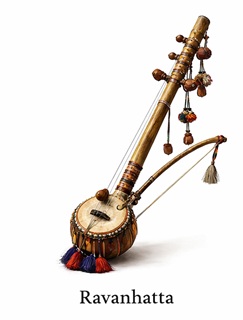
Ravanhatta

Ravanhatta

One of the oldest bowed string instruments of India, the Ravanhatta features a bamboo neck and a coconut-shell resonator covered with hide. Played primarily by the Bhopa community, it accompanies epic performances of Pabuji and Devnarayan, producing a raw and haunting tone suited to narrative singing.
Kamaicha

Kamaicha

The Kamaicha is a deep, resonant bowed instrument carved from mango wood and goatskin. Central to the Manganiyar tradition, it carries wedding songs, praise poetry, and spiritual compositions once performed in royal courts.
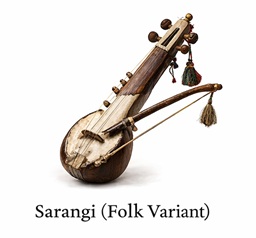
Sarangi

Sarangi (Folk Variant)

The Rajasthani sarangi closely follows the human voice. Used by both Manganiyar and Langha musicians, it enriches emotional depth and supports improvisation in folk melodies.
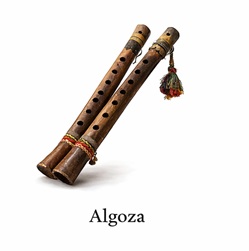
Algoza

Algoza

A unique double flute requiring circular breathing, the Algoza produces melody and drone simultaneously. Favoured by the Langha community, it reflects pastoral life, desert travel, and spiritual longing.
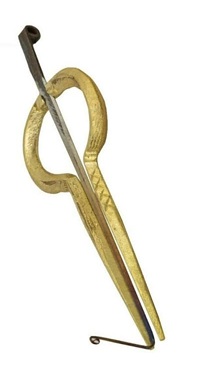
Morchang

Morchang

A metal jaw harp that creates rhythmic vibrations, the Morchang is used by Manganiyar singers for texture and rhythm. Its minimal form hides its powerful ability to shape groove and mood.
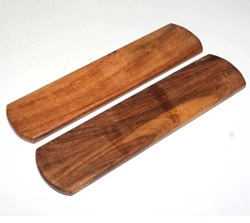
Khartal

Khartal

Wooden castanets played with rapid finger techniques, Khartal is strongly associated with Bhopa and Kalbelia performers, adding complex rhythmic patterns to storytelling and dance.
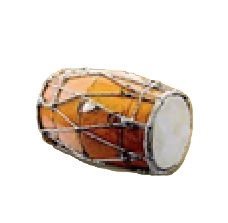
Dholak

Dholak

A two-headed hand drum used across Rajasthan, the Dholak anchors folk performances with steady rhythm and accompanies celebrations, rituals, and devotional singing.
Leave a Comment

Scroll to Top