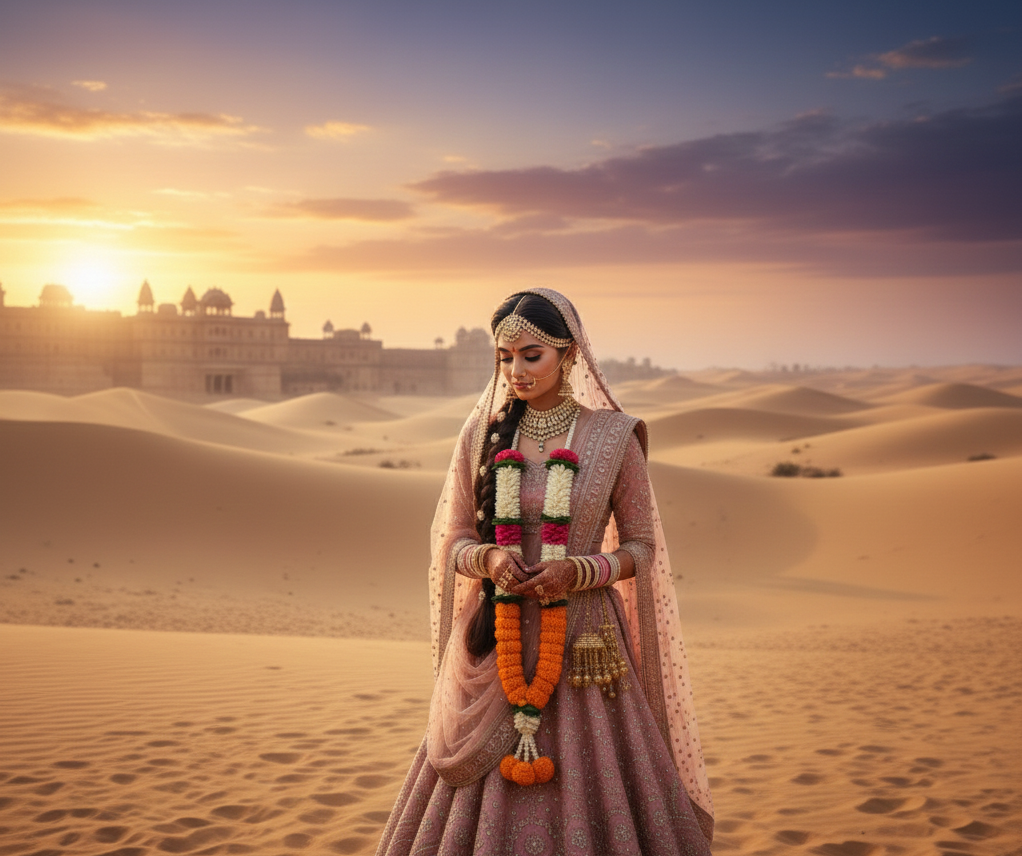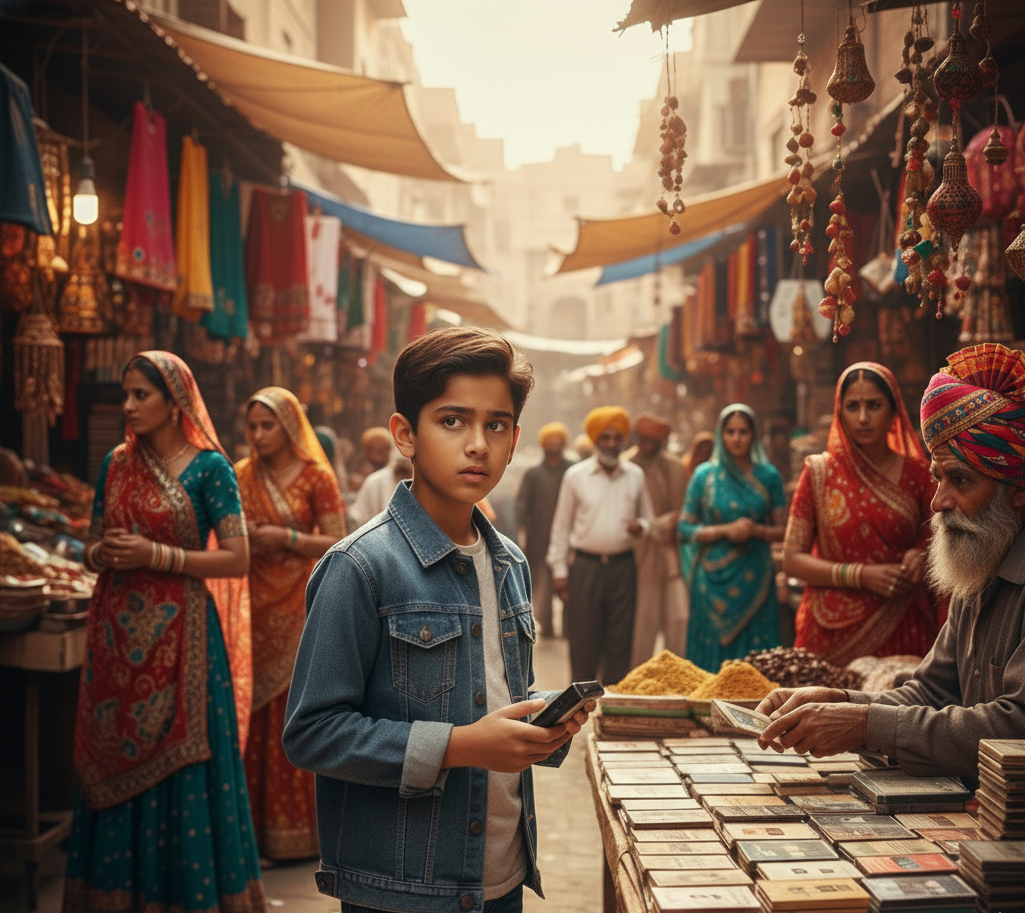
Rang rangeelo, ras bhar’yo, mharo pyaro Rajasthan.” A land of golden earth, where the sky turns silver —
Colourful, full of life and essence — my beloved Rajasthan.
I will be honest with you. As I begin writing this, I already know I will fall short. Not because the words aren’t there — but because no words have ever been enough. The whole of the internet, with its billions of pages, cannot hold Rajasthan in full. It would take lifetimes just to read the stories. Generations to walk its sands. And still — some fort would remain unexplored, some bhajan unheard, some warrior unhonoured. But today is Rajasthan Divas — and so we try.
The Date We Got Wrong For 75 Years
For 75 years, Rajasthan Divas was celebrated on 30th March. Until someone noticed something extraordinary hiding in plain sight: when Sardar Vallabhbhai Patel stood in Jaipur on 30 March 1949 and inaugurated Greater Rajasthan, that date in the Hindu calendar was Chaitra Shukla Pratipada — the first dawn of the Hindu New Year, Vikram Samvat. Under Revati Nakshatra and Indra Yoga. Auspicious beyond all measure. For three generations, a colonial calendar had quietly buried the true soul of our founding day.
In 2025, Chief Minister Bhajanlal Sharma brought it home. This year, 19th March 2026 — Rajasthan Divas — falls on Chaitra Shukla Pratipada, the Hindu New Year, Gudi Padwa, and the opening of Chaitra Navratri. Three beginnings on a single morning. If that is not auspicious, nothing is.
One Name. A Thousand Kingdoms.
Before it was Rajasthan, the British called it Rajputana. Before the British, it was a mosaic of magnificent kingdoms — Mewar, Marwar, Dhundhar, Hadoti, Shekhawati, Vagad — each with its own dynasty, its own language of honour, its own glorious and blood-soaked history. The Rajputs were Raja-putras, Sons of Kings, warriors whose code ran on three pillars: shaurya (valour), wafadaari (loyalty), and maryada — dignity unto death.
At independence in 1947, this land was not one state but 19 princely states, 3 chiefships, and a British territory — each with its own flag and army. The oldest, Mewar, had stood since 565 AD — over 1,400 years of unbroken lineage, the longest-surviving royal dynasty in the world. Sardar Patel, the Iron Man of India, stitched it all together across seven breathtaking phases between 1948 and 1956. A footnote history rarely tells: the day before the inauguration, his aircraft made an emergency landing in the Rajasthan desert. He walked out, dusted himself off, and inaugurated the state the very next morning. Some men are built differently.
The Warriors Empires Couldn’t Break
Maharana Pratap of Mewar — born in Kumbhalgarh — chose to eat forest roots and bread made of wild grass over signing a peace treaty with Akbar. After the Battle of Haldighati (1576), he retreated into the Aravallis and waged a 25-year guerrilla war. His horse Chetak, fatally wounded in battle, still carried him across a river to safety before collapsing. By 1582, Pratap had reclaimed most of Mewar. He died free.
Prithviraj Chauhan of Ajmer, the last great Hindu emperor of the north, defeated Muhammad Ghori in 1191. His court poet Chand Bardai immortalised his love and valour in the epic Prithviraj Raso. And Rani Padmavati (Padmini) of Chittorgarh — when Alauddin Khilji’s armies breached the gates in 1303 — led the greatest jauhar in Rajput history. Over 16,000 women walked into the flames. You can still see their ochre handprints on Chittor’s walls. The fort has seen three jauhars. It does not forget. Neither should we.
Did you know? The Great Wall of Kumbhalgarh — built in the 15th century by Rana Kumbha around the fort where Maharana Pratap was born — stretches for 36 kilometres, making it the second longest wall in the world after the Great Wall of China. Inside it sit 360 temples. The fort was never conquered by direct assault in its entire medieval history. The world just hasn’t been paying enough attention.
Temples That Rewrote What Stone Can Do
The Dilwara Temples near Mount Abu, carved in white marble between the 11th and 13th centuries, are said to have been built under a unique payment system — craftsmen paid by the weight of marble dust they produced. Every flick of the chisel, an act of devotion. The Ranakpur Jain Temple stands on 1,444 pillars — no two alike — a symphony carved in stone dedicated to Adinath, the first Jain Tirthankara.
Inside the living fort of Jaisalmer — built in 1156 AD, where nearly a quarter of the old city’s population still lives within its golden sandstone walls — are seven Jain temples from the 12th to 16th centuries, housing a library of palm-leaf manuscripts dating back 900 years. This fort changes colour through the day — amber at dawn, honey-gold at noon, flame-orange at dusk. A UNESCO World Heritage Site. An entire living neighbourhood. An act of wonder.
The Eklingji Temple near Udaipur, where every Maharana of Mewar considered himself not king — but merely the chief minister of the deity. They ruled a kingdom but called themselves servants. And Pushkar — one of the only temples in the world dedicated to Lord Brahma, the creator — sitting on a lake so ancient no one is certain of its origin, where pilgrims have come for over 2,000 years without interruption.
The Emperor Who Disguised Himself To Hear Her Sing
Mirabai — born a Rathore Rajput princess in Merta, married into the royal house of Mewar — gave up a palace to sing bhajans barefoot at Krishna’s feet. According to widely recorded accounts across centuries of Bhakti literature, Emperor Akbar himself, accompanied by the legendary court musician Tansen, came disguised as a humble pilgrim to Chittorgarh just to hear her sing — and fell at the feet of her deity in silence. Whether history confirms this meeting or devotion built it over centuries matters very little. The fact that this story has survived 500 years tells you everything about the power of her voice. More than 1,200 songs carry her name. We still sing them.
This same soil gave us Mehdi Hassan — the King of Ghazals — born in Luna, Rajasthan, whose voice Lata Mangeshkar said carried the touch of God. Jagjit Singh, born in Ganganagar, who returned the ghazal to a generation that had forgotten it. Grammy winner Vishwa Mohan Bhatt from Jaipur, inventor of the Mohan Veena. And Ustad Anwar Khan Manganiyar — Padma Shri awardee from Jaisalmer — whose community of hereditary Muslim musicians sings Hindu bhajans, Sufi qawwalis, and Rajasthani folk with equal devotion, on stages from Carnegie Hall to the Kremlin. In Rajasthan, music has never had a religion.
75% Vegetarian. Zero Compromise On Flavour.
Approximately 75% of Rajasthan’s population is vegetarian — the highest of any state in India, and by most estimates, the most vegetarian large region in the world. This is not a statistic. It is a civilisation’s statement. Jainism runs deep here; the Marwari trading communities built their empires on ahimsa. Non-violence in Rajasthan is not a philosophy. It is breakfast.
And the cuisine born from this desert — where water is precious and the Thar shows no mercy — is one of the most extraordinary on earth. Dal Baati Churma, sun-baked wheat dumplings drowned in ghee. Ker Sangri, a wild desert berry curry that nomads carried across the Thar for centuries. Ghevar, a latticed sweetmeat of flour and ghee eaten at every celebration that joy demands. This land took scarcity and turned it into a feast. It always does.
It is no surprise then that Rajasthan is one of India’s top tourist destinations — the forts, the colours, the food, the living heritage drawing millions of visitors every year, forming a cornerstone of the state’s economy. They come for the palaces. They stay for something harder to name.
The Crowns Are Gone. The Flame Isn’t.
In 1971, India abolished royal privileges. Nobody told the legacy. Maharaja Padmanabh Singh of Jaipur — polo captain, global face of Rajput heritage — carries the City Palace’s 300-year story with quiet grace into the modern world. Lakshyaraj Singh Mewar, 77th custodian of Mewar, the world’s longest-surviving royal lineage, continues the tradition of cultural custodianship that his family has maintained without interruption since 565 AD. And Gajendra Singh of Rohet, in Marwar, has transformed his ancestral home into one of India’s finest heritage stays — where guests sleep in rooms that remember 400 years of Rajput history and wake up to the same desert the Rathores once charged across on horseback.
The swords are in the museums. The values are not.
I began by saying I would fail. And I have — beautifully, necessarily, inevitably. Because Rajasthan is not a subject. It is not a state. It is not even just a story. It is the feeling you get standing at the edge of a Rajput fort at sunset, the wind carrying dust and the distant echo of a bhajan, realising that centuries have passed here and yet — somehow — nothing is truly lost.
Rang rangeelo, ras bhar’yo, mharo pyaro Rajasthan.” Colourful. Full of life. Full of essence.
My beloved Rajasthan.
🙏 Jai Rajasthan. Jai Mata Di. Jai Hind. 🙏
Rajasthan cannot be contained in one blog. It cannot be contained in a thousand. But if even a fraction of its glory reached you through these words — if you felt even a whisper of what this land carries in its sands — then this was worth writing.
If you think this story deserves to travel further, please share it in the comments below — and let Rajasthan find the people it was always meant to find.